
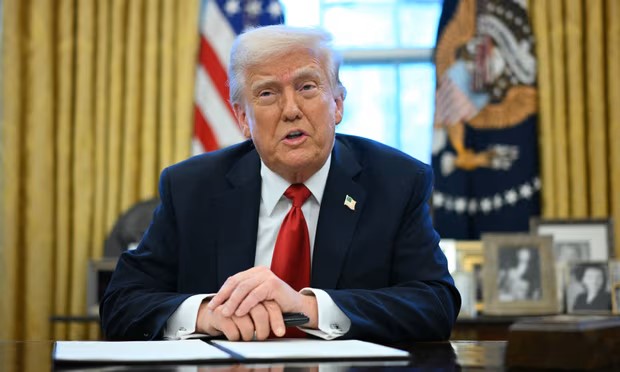
In a significant shift in U.S. trade policy, President Donald Trump has introduced a 10% baseline tariff on all U.S. imports, with additional reciprocal tariffs targeting countries with higher duties on American exports. Consequently, Nigerian exports to the U.S. will now face a 14% tariff, compared to the 27% rate the U.S. claims to face when exporting to Nigeria.
Announced during a “Liberation Day” event at the White House, President Trump emphasized that this move aims to promote “fair trade,” bolster American industries, and address trade imbalances. The tariffs, effective immediately, affect over 50 countries, including economic powerhouses like China, India, Japan, and the European Union, as well as developing markets across Africa, Asia, and Latin America.
For Nigeria, this development introduces new challenges for its export sector. According to Nigeria’s National Bureau of Statistics, trade between Nigeria and the U.S. totaled approximately N31.1 trillion between 2015 and 2024. During this period, Nigeria imported N16.4 trillion worth of goods from the U.S., with exports accounting for 8.7% of Nigeria’s total global trade. However, trade volumes have been declining, primarily due to reduced crude oil purchases by American buyers.
Related: EU Unveils Sanctions Helpdesk to Guide SMEs
The newly imposed tariffs could further strain U.S.-Nigeria trade relations. Nigerian exporters, particularly in the oil sector, may face increased costs when accessing the U.S. market. Analysts suggest that this could prompt Nigeria to diversify its trade partnerships, strengthening ties with other regions such as the European Union, the United Kingdom, and Asia.
The broader global reaction to the U.S. tariffs has been one of concern. Many affected nations are contemplating retaliatory measures, raising fears of a potential trade war that could disrupt international supply chains and elevate costs for businesses and consumers alike.
Impact on Nigerian Businesses
For Nigerian entrepreneurs and businesses, especially those engaged in exporting goods to the U.S., the immediate implication is an increase in export costs, potentially making Nigerian products less competitive in the American market. This scenario underscores the urgency for Nigerian businesses to explore alternative markets and reduce over-reliance on any single trading partner.
Moreover, the tariffs may serve as a catalyst for Nigerian industries to enhance local production capabilities and seek value addition in exports. By focusing on quality improvement and diversification, Nigerian businesses can better position themselves in the global market, mitigating the adverse effects of such international trade policies.
In response to these developments, it is imperative for Nigerian trade associations and business leaders to engage in dialogue with policymakers to formulate strategies that support exporters. This includes negotiating favorable trade agreements, providing export incentives, and investing in infrastructure that facilitates international trade.
As the global trade environment becomes increasingly complex, adaptability and proactive planning will be crucial for Nigerian businesses aiming to thrive amidst these challenges.


