
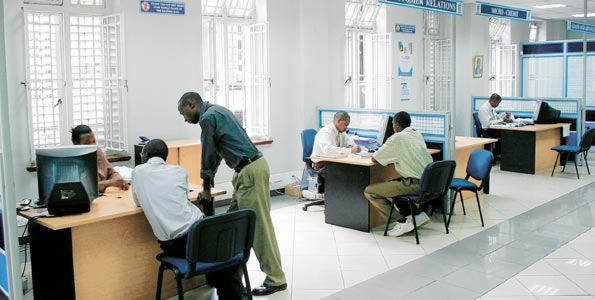
Welcome to Nigeria, a country where a quarter of its citizens are without bank accounts, citing trust concerns and expensive fees as key obstacles to joining the formal banking system, the World Bank reports.
The findings come from the World Bank‘s new Global Findex Database 2025, which examines financial inclusion, digital payments, savings, and lending patterns worldwide.
High fees mentioned by respondents include account opening and maintenance charges (like monthly fees) plus transaction costs for services such as balance enquiries, withdrawals, and money transfers.
The data shows Nigerian financial inclusion rose to 63% of adults in 2024, up from 45% in 2022.
Globally, financial account ownership continues expanding. While nearly half of adults lacked accounts in 2011 and 26% in 2021, this dropped to 21% by 2024. Still, 1.3 billion adults worldwide remain without formal financial access.
Nigeria ranks among eight nations housing 53% of the world’s unbanked population, over 650 million people. The others are Bangladesh, China, Egypt, India, Indonesia, Mexico, and Pakistan.
Related: How to Make Money Online with ChatGPT Prompts Without Degree
The report states, “In Nigeria, 25% of unbanked adults cited trust as a concern, often paired with worries about high service costs. About 20% of unbanked adults in Latin America and the Caribbean mentioned both issues. Trust relates to perceived account safety and understanding of service fees.”
It emphasises the need for “targeted financial education and proper consumer protections, including clear pricing, effective complaint handling, redress mechanisms, and strong fraud protection.”
Additionally, 22% of Nigeria’s unbanked cited costly financial services as barriers, suggesting demand for cheaper alternatives like mobile money accounts with lower fees.
Other factors keeping Nigerians unbanked include insufficient funds, relying on family members’ accounts, and distance from financial institutions.
While mobile money accounts lead growth in most sub-Saharan African countries, traditional banks still dominate in Nigeria and Ethiopia.
Mobile money barriers include inadequate funds, missing documentation, distance to agents, and high costs.
Current Nigerian banking statistics show 63% of adults have accounts and 54% use digital payments. While 43% saved at formal institutions, only 9% borrowed from them in 2024.
Mobile phone ownership reaches 84%, though just 38% used the internet in the three months before the survey.
This indicates high mobile adoption but limited recent internet use and restricted formal borrowing access, with family and friends remaining the primary lending source.


