
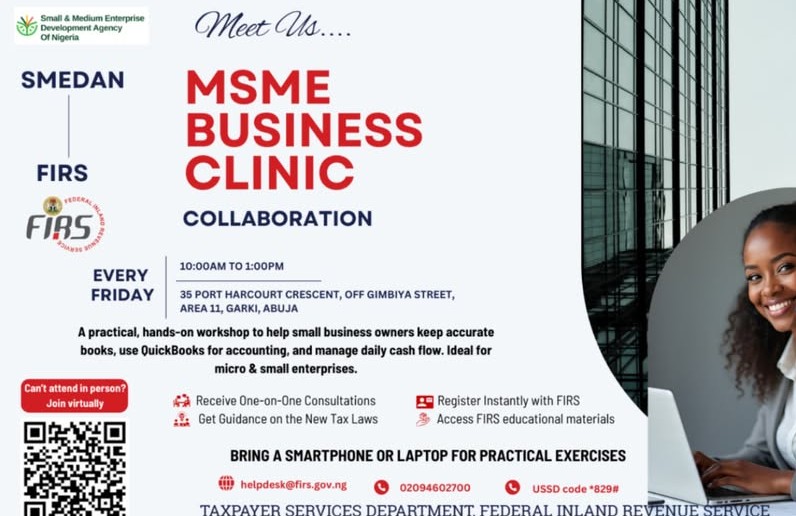
The Small and Medium Enterprises Development Agency of Nigeria (SMEDAN) has joined forces with the Federal Inland Revenue Service. Together, they’ve launched a weekly MSME Business Clinic. The clinic provides practical support, tax guidance and personalised consultations for small business owners.
The initiative aims to strengthen Nigeria’s micro, small, and medium enterprise sector. It focuses on improving compliance, operational efficiency and business growth opportunities. The clinic runs every Friday from 10:00 a.m. to 1:00 p.m. Entrepreneurs get direct access to specialists who can address various challenges.
These include tax-related enquiries and proper documentation. Registration processes and operational bottlenecks also get attention. Many of these issues hinder the growth of small businesses. The clinic provides personalised advice and actionable solutions. It helps MSMEs navigate business management complexities more effectively. This approach helps businesses avoid common pitfalls that limit scalability.
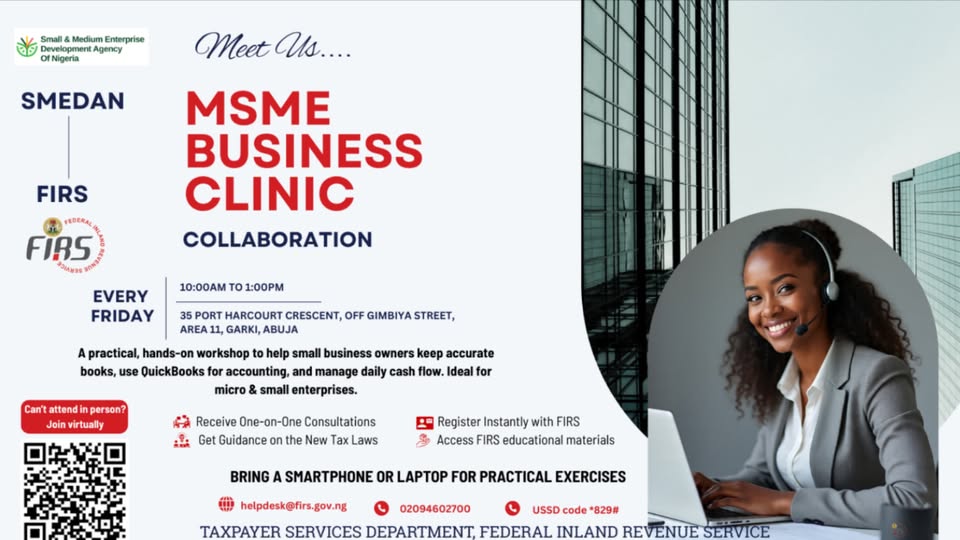
Virtual Access Allows MSMEs Across Nigeria to Join the SMEDAN and FIRS Sessions
Business owners can join sessions virtually. They use the official link or scan the provided QR code. Entrepreneurs from across Nigeria can participate remotely without the need for physical presence.
Digital access ensures benefits reach those in remote areas. Expert guidance becomes available to everyone. This helps level the playing field for MSMEs nationwide. The virtual format removes barriers. Business owners in states far from Abuja or Lagos can now access support services.
Many Nigerian small business owners struggle to get reliable information. Tax obligations, registration requirements and business formalisation remain confusing. This confusion keeps businesses operating informally. It limits their access to credit, government contracts and larger market opportunities.
Related: Moniepoint Launches Moniebook Platform for Nigerian MSMEs
SMEDAN and FIRS Focus on Reducing Tax Compliance Confusion
Organisers say the initiative reduces confusion around tax processes. It promotes formalisation and enhances the business environment for micro and small enterprises.
The clinic encourages compliance. It provides practical management tools. This builds a stronger, more resilient MSME sector. That sector can make a meaningful contribution to national economic growth.
Officials from SMEDAN and FIRS emphasise that the clinic goes beyond regulatory compliance. It’s also about capacity building. Entrepreneurs gain insights into financial management, business planning and growth strategies. These help them expand operations, attract investments and create jobs.
This broader focus distinguishes the clinic from simple regulatory enforcement. If executed well, it could shift perceptions of FIRS. The agency could be seen as a partner in business growth, not just a collection agency.
MSME Business Clinic Aligns with Government Economic Development Goals
This initiative aligns with government efforts to support MSMEs. Small businesses drive economic development. The clinic ensures they’re better equipped to thrive in a competitive market.
MSMEs account for significant employment and GDP contribution in Nigeria. Yet they remain underserved by government institutions and formal financial systems. Initiatives like this clinic bridge that gap. They provide accessible, practical support.
The challenge lies in maintaining consistency and quality as the programme scales. Many government initiatives start strong but fade quickly. Institutional attention moves elsewhere. The test for SMEDAN and FIRS is sustainability. Can they maintain this weekly schedule over months and years, not just during launch?
Agencies Plan to Update Content Based on Business Needs
The clinic has generated positive responses from participants. Both agencies plan to maintain a consistent schedule. They’ll continuously update content based on evolving needs.
The clinic combines expert guidance with practical, accessible solutions. It represents a significant step toward empowering Nigeria’s small business community. This fosters sustainable economic development across the country.
The commitment to adapt content based on feedback suggests a responsive approach. Most government programmes operate with rigid, predetermined curricula. If SMEDAN and FIRS actually listen to what business owners require, the clinic could become genuinely valuable. It won’t be just another box-ticking exercise.
For Nigerian small business owners, this weekly clinic offers a low-risk opportunity. Those struggling with tax compliance or who are uncertain about formalisation requirements benefit most. They get answers directly from government specialists. The virtual format means entrepreneurs can participate without losing a full business day travelling to government offices.
The real measure of success will be practical outcomes. Do participants leave with actionable solutions they can implement immediately? Or do they just get generic advice? If SMEDAN and FIRS can deliver consistently, they’ll have created something genuinely useful for Nigeria’s MSME sector.


