
Solar energy financing has long been the missing piece for Nigerian businesses that want to go solar but cannot afford the upfront costs. Most are willing to make the switch. The sticking point is always money.
That is the problem Daystar Power and Sterling Bank are tackling with a newly expanded partnership. The deal pairs long-term energy infrastructure with dedicated credit support, designed to make solar energy financing practical for commercial and industrial customers across Nigeria.
How the solar energy financing deal works
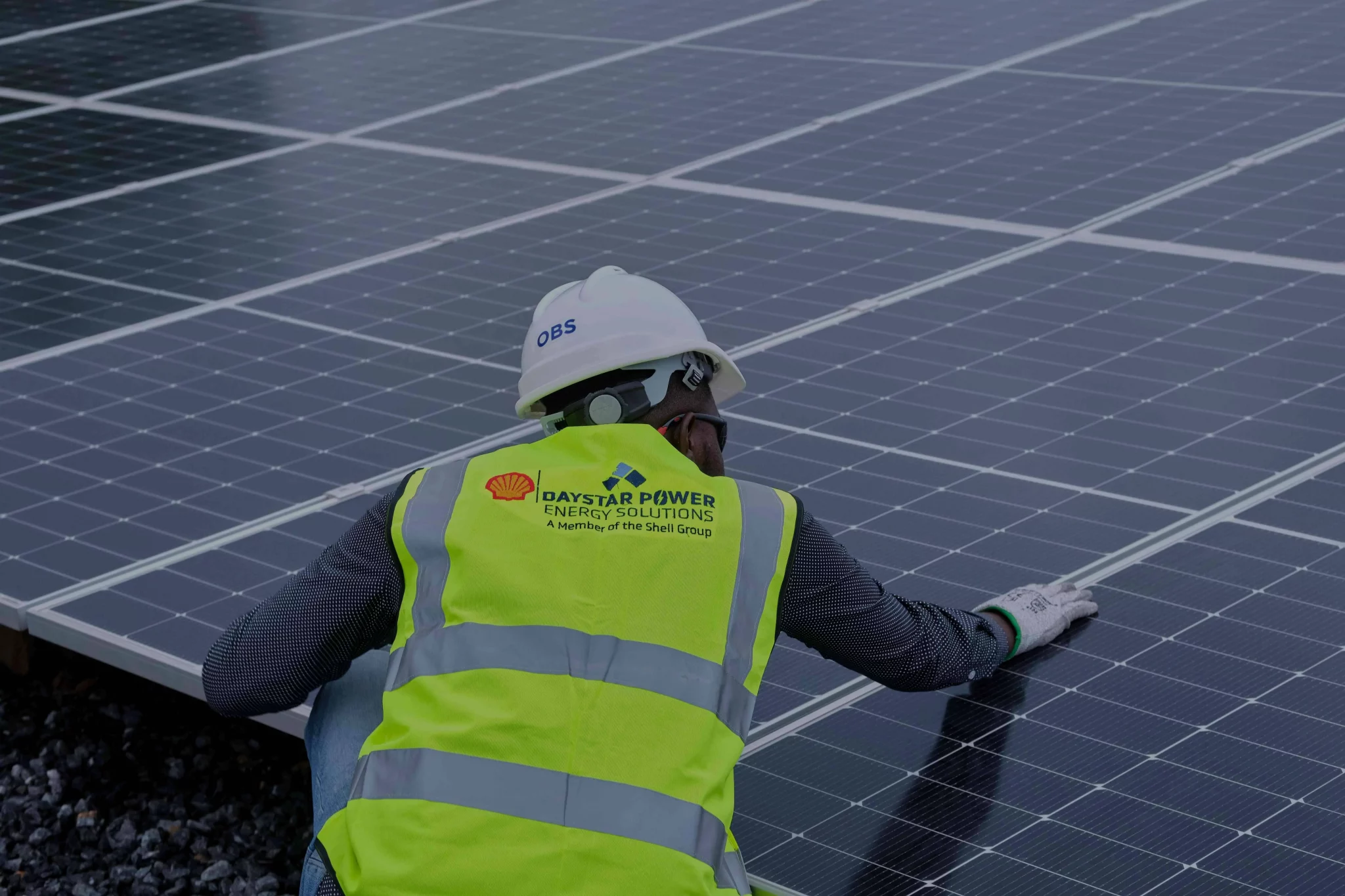
Sterling Bank has introduced a dedicated credit facility for eligible businesses. Daystar Power deploys solar-hybrid systems through long-term Power Purchase Agreements, known as PPAs. Businesses pay for the energy they use rather than the cost of installing the system itself.
No large capital outlay. No heavy borrowing. Just a predictable energy bill that is lower than what most businesses are currently paying for diesel.
This kind of solar energy financing model has worked in other markets. Daystar has been building its business around it in Nigeria for years. The difference now is that Sterling Bank’s credit facility makes it accessible to a wider range of businesses.
Why diesel dependency is still a real problem
Nigeria’s grid remains unreliable. Businesses across the country depend on diesel and petrol generators to keep operations running. According to the World Bank, inadequate power supply costs Nigerian businesses significantly in lost productivity each year.
Rising fuel prices have made the situation worse. Many businesses spend more on energy than on any other operational cost. The case for solar energy financing has never been stronger.
The challenge has always been that solar requires capital. Most businesses would rather not lock up funds in energy infrastructure. That is where structured solar energy financing changes the conversation entirely.
Related: Economic Reforms Unleash New Energy Opportunities for SMEs
What the two companies said
Yischai Beinisch, Chief Executive of Daystar Power, said the deal offers a real solution. “This partnership combines the strengths of Daystar Power and Sterling Bank to make renewable energy accessible to industrial customers. Together, we will deliver cleaner, more reliable and affordable energy to the power industry in Nigeria.”
He also noted that financing terms directly shape how businesses think about energy investment. When the numbers work, the decision becomes straightforward.
Dele Faseemo, Group Executive for Corporate and Investment Banking at Sterling Bank, put it plainly. “Access to affordable and reliable energy remains one of the biggest barriers to business growth in Nigeria. Through this partnership with Daystar Power, we are introducing a financing structure that removes the burden of significant upfront capital investment.”
What this means for Nigeria’s energy transition
Solar energy financing at scale could help Nigeria reduce its dependence on fossil fuels. Getting businesses off diesel generators matters not just for costs but also for the country’s carbon emissions targets.
The Nigerian government has set ambitions around renewable energy adoption. Industry stakeholders have repeatedly pointed to financing access as the main obstacle. This partnership is a direct response to that.
For a deeper look at Nigeria’s renewable energy landscape, the International Renewable Energy Agency publishes regular data on capacity and investment trends worth reviewing.
The bottom line
Solar energy financing in Nigeria has historically been talked about more than acted on. Deals like this one suggest the market is starting to catch up with the rhetoric.
For businesses currently burning through diesel and absorbing unpredictable fuel costs, the proposition is simple. Lower bills, more reliable power, and no large capital requirement to get started.
Whether this model scales depends on how many businesses qualify for Sterling Bank’s credit facility and how quickly Daystar can deploy systems. But the structure is sound, and the timing is right.


