
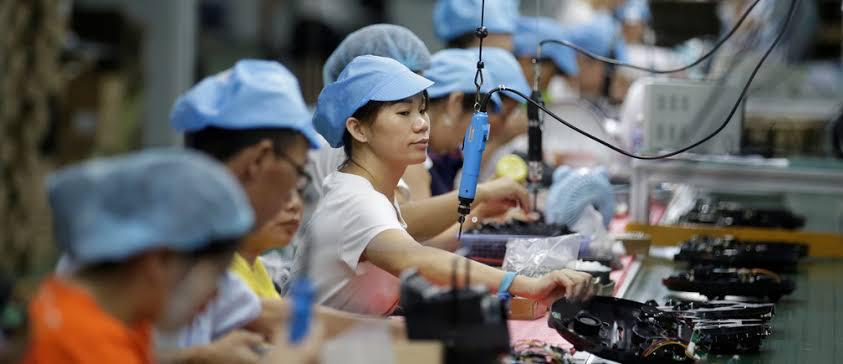
For the manufacturers of China, their production costs have been rising significantly and are now at its peak, something that had not happened since 2008. This is slashing the profit of business owners who produce from them.
According to Wind Information, this was the fastest increase in manufacturing costs since September 2008, when the index jumped 9.13 percent.
According to a Reuters survey, the increases exceeded estimates of an 8.5 percent increase, although they are coming off a low base. During the first months of the coronavirus pandemic, the index declined 3.7 percent in May 2020.
The increasing production costs pressures in China’s factories are threatening to spill over onto the rest of the world, because it is moving already high prices even higher.
High producer inflation is a source of concern for Chinese firms and the country’s ongoing recovery from the pandemic. It shows that growing costs of raw material are eating into firms’ earnings more aggressively, forcing them to cut expenses by reducing production or even laying off staff. The world’s second-largest economy would suffer as a result.
The statistics bureau stated that soaring crude oil, iron-ore and metals prices boosted factory-gate prices last month, and drove China’s imports to the fastest increase in over a decade.
“Industrial inflation pressure will likely remain and pose additional risks to economic growth,” Citigroup economists said in a note, adding that there is no quick fix to this round of commodity-led inflation.
Given how important China’s manufacturing industry is to global trade, the raised pricing might have worldwide ramifications. Last month, China’s consumer price index increased by only 1.3 percent, showing that manufacturers are not passing on their costs to domestic consumers. Instead, producers may try to shift the cost to other countries, adding to global pricing pressures.
China has been trying to keep expenses under control as market regulators promise “zero tolerance” for commodity market speculators.
Commodity futures trading limitations and margin requirements have also been tightened by China’s major stock exchanges. It’s possible that Beijing may take even more steps.
Bloomberg reported on Wednesday that the government is considering restricting the price of coal, which is used to power many Chinese power plants, citing unidentified sources.
On the Shanghai Futures Exchange, rebar, a form of steel used to support concrete, has dropped 18 percent from its high in May, but it is still 16 percent more costly than at the end of last year. So far, the new restrictions appear to be holding the prices back, at least in part.
However, given the growing cost of oil and the continued scarcity of raw materials, producer price inflation may stay significant in June. Covid-19 outbreaks are also affecting some major ports in southern China, which might initiate shipping constraints and put additional upward pressure on freight pricing.