
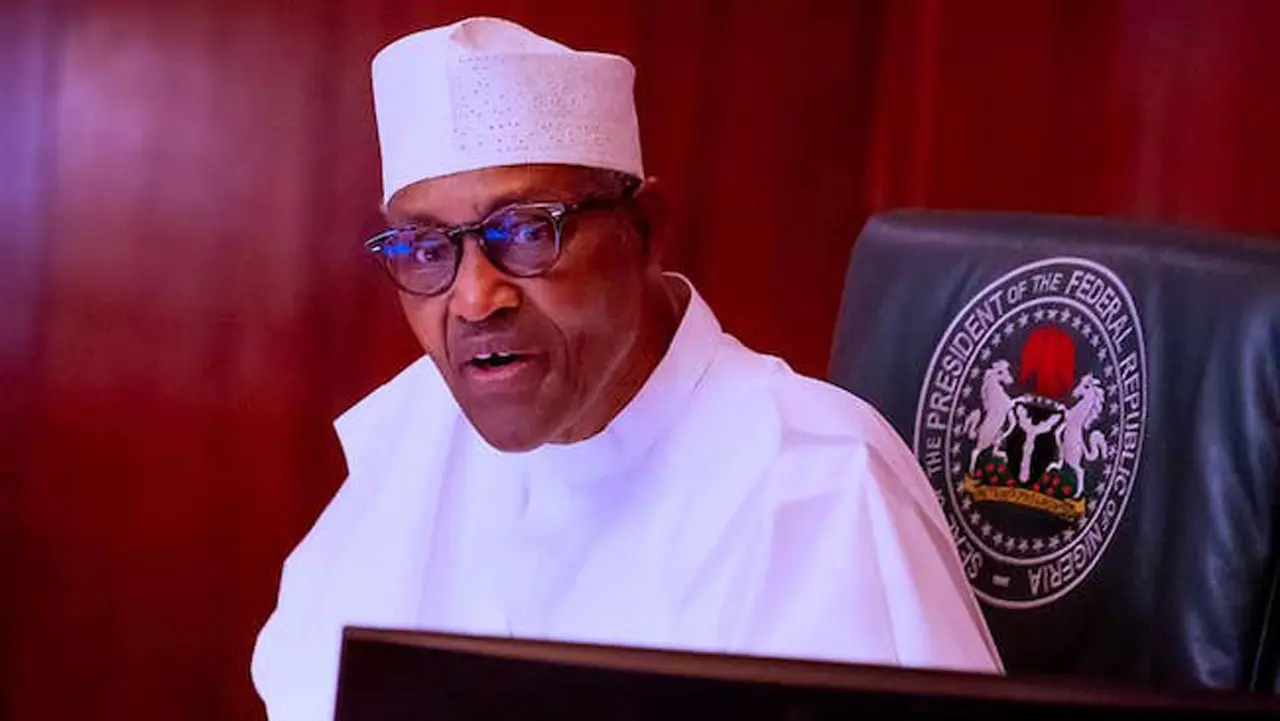
As Nigeria mourns the passing of former President Muhammadu Buhari, who died on July 13, 2025, at age 82, we reflect on the transformative Buhari’s economic policies that defined his presidency from 2015 to 2023. His tenure marked a pivotal era of bold reforms and visionary leadership, with Buhari’s economic policies fundamentally reshaping Nigeria’s economic landscape and laying crucial foundations for the nation’s long-term prosperity and sustainable development.
Buhari’s Economic Policies: A Visionary Leader’s Economic Philosophy
Buhari’s economic policies were rooted in the belief that Nigeria needed to move beyond its over-dependence on oil revenues. His administration pursued ambitious growth targets through comprehensive reforms, navigating the country through oil shocks, recessions, and the global COVID-19 pandemic while building a more resilient and diversified economy.
From his early days as military head of state in the 1980s, when he implemented strict austerity and anti-corruption measures, to his civilian presidency, Buhari consistently championed fiscal prudence and structural change. His legacy demonstrates how focused leadership and strategic vision can accomplish transformative change, even in the face of significant challenges.
Related: Buhari Directs CBN, others to Provide Stimulus Packages for SMEs
Economic Recovery and Growth Plan: The Foundation of Transformation
The cornerstone of Buhari’s economic policies was the Economic Recovery and Growth Plan (ERGP), launched in 2017 to catalyze Nigeria’s recovery from recession. Despite global headwinds, this plan showed remarkable results by late 2017, with oil prices stabilizing at $75 per barrel and consistent production levels.
The ERGP’s success laid the groundwork for sustained economic improvement. By 2024, the World Bank reported that Nigeria’s economy expanded by 3.4% – its fastest growth in a decade, crediting the reforms initiated during Buhari’s administration for this acceleration. International observers noted this progress, with the World Bank’s Nigeria director remarking that “Nigeria has made impressive strides to restore macroeconomic stability.”

Buhari’s Economic Policies: Infrastructure Revolution, Building Growth
President Buhari understood that infrastructure was the backbone of economic development. His administration’s unprecedented focus on physical infrastructure earned him recognition as the “father of modern railway in Nigeria.” The implementation of Buhari’s economic policies created lasting monuments to his vision:
Railway Transformation
- Lagos-Ibadan Railway: Revolutionized transportation and commerce between Nigeria’s commercial hub and the capital
- Abuja-Kaduna Rail Line: Enhanced connectivity and security for travelers and goods
- Itakpe-Warri Railway: Opened new corridors for economic activity
- Ajaokuta-Kano-Kaduna Rail Line: Advanced to transport gas to Northern Nigeria, supporting industrial growth
Road Infrastructure
The administration restored over 13,000 kilometers of federal highways nationwide, including:
- Kaduna-Kano highway
- Lagos-Ibadan Expressway modernization
- Enugu-Port Harcourt corridor
- Bodo-Bonny road project
- Apapa-Oshodi-Oworonshoki-Ojota reconstruction
The Second Niger Bridge: A Symbol of Unity
Perhaps the most visible symbol of Buhari’s infrastructure legacy is the Second Niger Bridge. This engineering marvel, which had remained a dream for decades, became a reality under his determined leadership. The bridge not only eased traffic congestion but also boosted economic activity between the South-East and South-South regions, creating new avenues for business and investment.
Buhari’s Economic Policies: Agricultural Renaissance and Food Security
Buhari’s vision for agricultural transformation was encapsulated in his call for Nigerians to “grow what we eat and eat what we grow.” The success of Buhari’s economic policies in agriculture achieved remarkable results:
The Anchor Borrowers Programme: Core of Buhari’s Economic Policies
This transformative initiative provided over 4.8 million smallholder farmers with access to improved seeds, fertilizers, and guaranteed markets. The Buhari economic policies in agriculture had a substantial impact:
- Milled rice production rose from 3.9 million tonnes in 2015 to 4.5 million tonnes in 2016
- Rice imports were reduced by over 90%, saving billions in foreign exchange
- Maize output climbed from 10.1 million tonnes in 2014 to peaks over 12 million tonnes
- Cotton production was significantly boosted
Food Security Achievement
The agricultural transformation moved Nigeria from importing over 2 million tons of rice annually to achieving near self-sufficiency. This achievement saved billions in foreign exchange, created countless jobs in rural communities, and improved food security across the nation.
Buhari’s Economic Policies: Social Investment and Empowerment
President Buhari’s compassionate leadership was evident in the National Social Investment Programme (NSIP), the largest social protection program in Africa. The Buhari economic policies weren’t just policy initiatives – they were expressions of his deep commitment to the Nigerian people:
N-Power Programme
- Provided employment and skills training to over 500,000 young graduates
- Equipped citizens with the skills needed for the modern economy
- Created pathways out of poverty for Nigerian youth
Additional Social Programs
- Conditional Cash Transfer Program: Supported the most vulnerable households with direct financial assistance
- Home Grown School Feeding Programme: Fed millions of school children while boosting local agriculture
- MarketMoni and TraderMoni: Provided zero-interest loans to hundreds of thousands of small traders and artisans
During the COVID-19 pandemic, the administration launched the N75 billion Survival Fund for MSMEs, which by 2021 had supported 1.1 million micro-businesses across Nigeria, including payroll support for approximately 500,000 employees.

Buhari’s Economic Policies: Economic Diversification Beyond Oil
Buhari’s administration made significant strides in diversifying Nigeria’s economy away from oil dependence through comprehensive economic policies.
Manufacturing Sector Growth
- The manufacturing sector experienced notable growth, particularly in textiles, pharmaceuticals, and agro-processing
- The backward integration policy encouraged local production and reduced imports
- Local content development strengthened domestic manufacturing capabilities
Creative Economy Support
- The Nollywood film industry received unprecedented support and recognition
- The sector’s contribution to GDP grew substantially
- Nigeria was established as a global entertainment powerhouse
Non-Oil Revenue Growth
By 2022, non-oil revenues made up nearly 60% of federal income, demonstrating the success of diversification efforts.
Buhari’s Economic Policies: Digital Economy Innovation
President Buhari’s forward-thinking approach to technology positioned Nigeria as a leader in Africa’s digital transformation. The Buhari economic policies in technology included:
National Digital Economy Policy and Strategy
- Created the framework for Nigeria’s fintech revolution
- Supported the emergence of several unicorn startups
- Established Nigeria as a regional tech hub
- Encouraged innovation and entrepreneurship among young Nigerians
The digital economy’s contribution to GDP grew significantly during his tenure, creating new opportunities for young entrepreneurs and positioning Nigeria at the forefront of Africa’s technological advancement.
Legislative and Institutional Reforms
Buhari’s administration passed critical legislation that modernized Nigeria’s legal and regulatory framework:
Key Legislative Achievements
- Petroleum Industry Act (PIA) 2021: Modernized oil and gas sector governance after 20 years of deliberation
- Companies and Allied Matters Act (CAMA) 2020: Simplified business registration and improved the business environment
- Electricity Act: Enabled decentralization of the power sector
- Not Too Young to Run Bill: Promoted youth political participation
- Nigerian Startup Act: Supported the technology and innovation ecosystem
Business Environment Improvements
Nigeria’s ease-of-doing-business ranking improved significantly, moving 39 places up from 170 to 131 in the World Bank’s ranking, achieving over 160 individual reforms.
Anti-Corruption and Governance Reforms
A defining theme of Buhari’s career was his unwavering commitment to fighting corruption:
Asset Recovery Success
- Billions of dollars in stolen assets were recovered
- In 2018, Nigeria repatriated $322 million of Abacha-era funds from Switzerland
- In 2020, another $311 million was recovered from the US and Jersey
- Funds were transparently directed to social and infrastructure projects
Transparency Initiatives
- Treasury Single Account (TSA): Centralized government finances and reduced leakages
- Whistleblower Policy: Enabled citizens to report corruption
- Integrated Personnel and Payroll Information System (IPPIS): Centralized federal payroll and eliminated ghost workers
- Government Integrated Financial Management Information System (GIFMIS): Improved fiscal discipline
International Recognition and Praise
The global community recognized Buhari’s economic reforms:
World Bank and IMF Endorsements
- The World Bank praised Nigeria’s “impressive strides to restore macroeconomic stability.”
- The IMF commended Nigeria’s “tough structural reforms” for “stabilizing the economy and building resilience.”
- International financial institutions specifically highlighted the bold structural changes implemented during his tenure
Domestic Recognition
The Lagos Chamber of Commerce noted that Buhari’s legacy was “defined by a deep commitment to fighting corruption, blocking revenue leakages, strengthening public finances, and driving structural reforms.”
Challenges and Resilience
Despite remarkable achievements, Buhari’s administration faced significant challenges:
Economic Pressures
- Two recessions (2016 and 2020) due to oil price crashes and the COVID-19 pandemic
- Rising inflation and unemployment rates
- Increased debt levels to finance infrastructure and social programs
Measured Response
The administration’s response to these challenges demonstrated the resilience and strategic thinking inherent in Buhari’s economic policies. Despite global economic headwinds, key reforms were maintained, and the foundations for long-term growth were preserved through the consistent implementation of Buhari’s economic policies.
A Legacy That Endures
President Buhari’s economic legacy extends far beyond his time in office:
Sustainable Foundations
- Infrastructure projects that will serve Nigeria for generations
- Agricultural transformation that continues to ensure food security
- Digital economy framework that supports ongoing innovation
- Institutional reforms that promote transparency and accountability
Continuing Impact
From the farmer in Kebbi State still benefiting from the Anchor Borrowers Programme to the young entrepreneur in Lagos building on the digital economy framework, Buhari’s economic policies continue to drive growth and opportunity across Nigeria.
Diverse Perspectives on Buhari’s Economic Approach
While President Buhari’s economic policies garnered significant praise for their transformative impact, they also sparked diverse opinions across Nigeria’s political and economic landscape. Supporters highlight his infrastructure achievements, agricultural revolution, and anti-corruption efforts as foundational to Nigeria’s future prosperity. Critics, however, point to challenges including increased debt levels, inflation concerns, and unemployment rates during his tenure.
Some economists praised his long-term vision and institutional reforms, noting that the Buhari economic policies prioritized sustainable development over short-term gains. Others argued that certain policy implementations could have been more efficient. The World Bank and the IMF’s positive assessments of his reforms contrast with domestic debates about immediate economic impacts versus long-term benefits.
This balanced perspective acknowledges that while Buhari’s economic policies achieved significant milestones in infrastructure, agriculture, and economic diversification, they also faced implementation challenges and mixed public reception – a testament to the complexity of economic transformation in a developing nation.
A Transformative Economic Legacy
As Nigeria bids farewell to President Muhammadu Buhari, his economic achievements stand as a testament to visionary leadership and unwavering commitment to national development. The Buhari economic policies focused on infrastructure, agriculture, diversification, and institutional reform, creating a more resilient and sustainable economic foundation for Nigeria.
The railways he built, the farmers he empowered, the institutions he strengthened, and the opportunities he created will continue to benefit generations of Nigerians. The Buhari economic policies remind us that true leadership is measured not by the years lived, but by the positive change created for future generations.
President Buhari’s economic reforms weren’t just policies – they were investments in Nigeria’s future. From reducing oil dependence to building world-class infrastructure, from feeding the nation to empowering the youth, his comprehensive approach to economic development has set Nigeria on a path toward sustainable prosperity.
As we honor his memory, we celebrate not just his life, but the economic transformation he bequeathed to Nigeria. His vision of a diversified, self-sufficient, and prosperous Nigeria continues to inspire and guide the nation he served so faithfully.
May his soul rest in perfect peace, and may his economic legacy continue to drive Nigeria toward the greatness he envisioned. The foundations he laid will support generations of Nigerians in their pursuit of prosperity and economic independence.
Rest in Peace, President Muhammadu Buhari (1942-2025) – A leader whose economic vision transformed a nation.


