
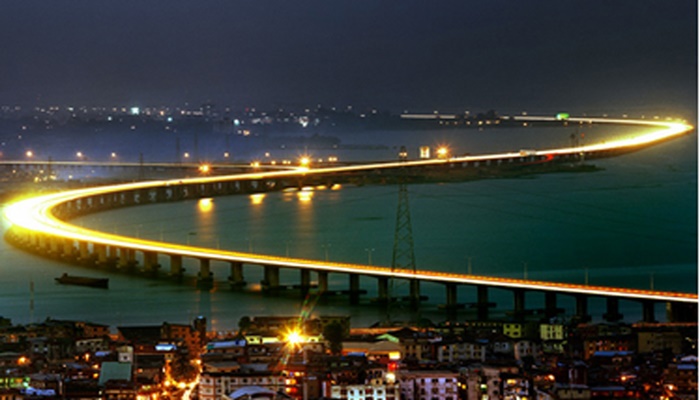
Works Minister David Umahi announced that fixing Lagos State’s Third Mainland Bridge will require over N3 trillion.
Following a Federal Executive Council meeting in Abuja, Umahi explained that underwater and structural evaluations revealed extensive damage from illegal sand mining, erosion, and corrosion affecting the bridge’s foundation structures.
“Rehabilitation costs are estimated at N3.8 trillion, while complete reconstruction would be approximately N3.6 trillion,” the minister stated. “We’ve received approval for seven specialist contractors to conduct detailed investigations, designs, and bidding for both options under an EPC+F [Engineering, Procurement, Construction, and Financing] framework.”
Similar damage was found at Carter Bridge in Lagos, which Julius Berger determined requires full replacement at an estimated N359 billion cost.
The FEC approved public-private partnership procurement processes for these projects, with plans to seek funding from international lenders, including Deutsche Bank.
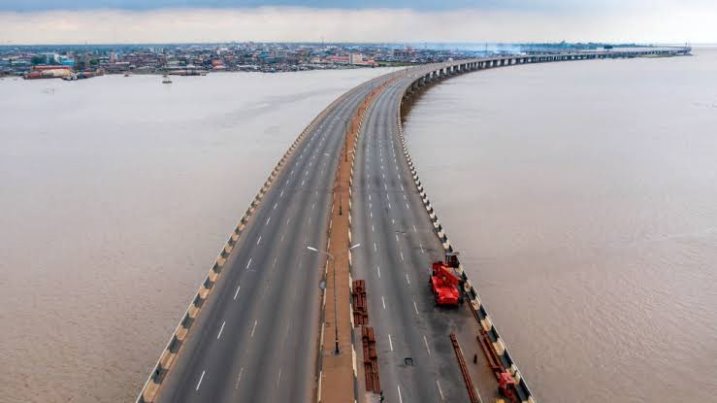
Opened in 1990, the Third Mainland Bridge is Nigeria’s longest bridge and a vital transportation infrastructure for Lagos, serving its approximately 20 million inhabitants. While receiving periodic maintenance, recent inspections revealed more extensive deterioration than previously documented.
“Underwater issues are worsened by years of neglect and human activities that damaged the bridge’s foundation,” Umahi said. “Action cannot be postponed. Rehabilitation demands substantial resources and specialised engineering. New construction costs slightly less, but remains a major project.”
Related: 13 Essential Business Tools Every Entrepreneur Should Know in 2025
Beyond Lagos bridges, the FEC approved repairs for multiple damaged bridges nationwide: Jalingo Bridge (Taraba), the fire-damaged Ido Bridge, Keffi Flyover (Nasarawa), Mokwa Bridge (Niger), an Abuja-Kogi route bridge, vehicle-damaged Lagos-Ibadan corridor bridges, Jebba Bridge (Kwara), and Itokin-Ikorodu Bridge (Lagos).
“These urgent repairs will be documented and sent to the President for approval via the Finance Ministry,” he noted.
Umahi also revealed FEC allocated N493 billion for two major projects: Kano-Katsina Road upgrades and new Carter Bridge construction.
The 152-kilometre Kano-Katsina Road, originally divided into two contracts, has undergone substantial cost increases due to economic factors.
Section One, initially contracted in 2013 for N14 billion and revised to N24 billion, now costs N68 billion. Section Two, awarded in 2019 for N29 billion and revised to N46 billion, will now require N66.115 billion.
The 2024 and 2025 budgets allocated N6 billion and N34 billion, respectively, for Section One, while Section Two received N80 billion across both years.
The minister stressed that bridge and road infrastructure drive economic growth and national connectivity. The government will utilise EPC+F models and PPP arrangements to minimise dependence on budget allocations for major projects.
“Projects of this scale cannot rely solely on federal budget funding,” Umahi explained. “We’re seeking partnerships that attract private investment while maintaining government oversight and quality standards.”
Both the Third Mainland and Carter bridges form essential parts of Lagos’ road network, handling hundreds of thousands of vehicles daily.
Detailed studies and procurement for the Lagos bridge projects will begin immediately, with schedules dependent on financing agreement completion.


