
Google has announced the opening of applications for the 10th cohort of the Google for Startups Accelerator Africa. The company, in a statement released on Thursday, said applications will be opened until 18 March 2026.
According to Google, the 12-week AI First Accelerator is a hybrid programme designed for Series A startups that are based in Africa or building Africa-focused solutions using AI and machine learning.
Google disclosed that selected startups will gain access to its AI expertise and technical resources, receive mentorship from experienced AI professionals, and benefit from networking opportunities with peers and industry leaders across the global tech ecosystem.
The company said the programme is aimed at helping participating startups strengthen their products, scale responsibly, and translate advanced research into real-world solutions.
Google Focuses Cohort 10 on AI for Health and Societal Benefits
Speaking on the new cohort, Head of Startup Ecosystem Africa at Google, Folarin Aiyegbusi, said the continent’s tech landscape is undergoing a significant shift toward more advanced innovation.
“Africa’s tech landscape is seeing a vibrant shift toward deep tech innovation,” Aiyegbusi said. “For Class 10, we are focusing on the potential of AI to drive health and societal benefits, providing the infrastructure and expertise to turn these startups into the research labs of the continent.”
The emphasis on health and societal benefits reflects both opportunity and necessity. Africa faces massive challenges in healthcare access, climate adaptation, agricultural productivity, and other areas where AI could genuinely improve outcomes at scale.
However, the framing of African startups as “research labs of the continent” raises questions about whether Google views these companies primarily as commercial ventures or as development projects. The most successful tech companies solve real problems while building sustainable businesses, not just conducting research.
Google Accelerator Has Supported 180 African Startups Since 2018
Since launching the Google for Startups Accelerator Africa in 2018, the programme has supported more than 180 startups across 17 African countries. Google said these startups have collectively raised over $350m in funding and created more than 3,700 direct jobs, underscoring the programme’s role in strengthening Africa’s startup ecosystem and attracting investor interest.
These numbers sound impressive, but require context. Over 180 startups across seven years means roughly 26 startups per cohort. If those 180 companies collectively raised $350m, that’s an average of less than $2m per company, suggesting most haven’t progressed beyond seed or early Series A funding.
Creating 3,700 jobs across 180 companies averages about 20 employees per startup. This is respectable for early-stage ventures but hardly indicates massive scale or market dominance.
The statistics demonstrate that Google’s accelerator provides meaningful support, but they don’t suggest it’s producing unicorns or transformative companies at a significant frequency.
Six Nigerian Startups Featured in Cohort 9 Last Year
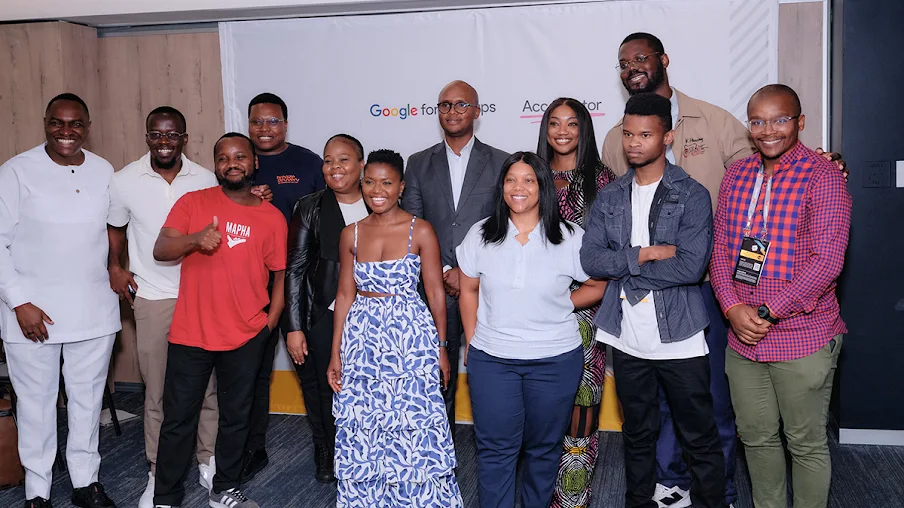
Last year, six Nigerian startups were selected for cohort 9 of the Google for Startups Accelerator programme. The six startups were among the 15 AI-driven ventures selected from across Africa.
Cohort 9 featured startups from Ghana, Ethiopia, Kenya, Nigeria, Rwanda, Senegal, and South Africa, all using artificial intelligence to tackle pressing challenges across sectors like fintech, healthtech, logistics, and agritech.
The six Nigerian startups include E-doc Online, a compliance and credit intelligence platform that uses real-time banking data to streamline onboarding and lending processes; GoNomad, which helps African businesses and freelancers build global companies and receive international payments like local entities; and Middleman, a sourcing and payments platform simplifying imports from China for African businesses.
Others are Myltura, a digital health platform using AI to offer remote care, testing access, and integrated health data services; Pastel, which delivers enterprise-grade AI tools to financial institutions, including fraud detection and anti-money laundering solutions; and Scandium, which provides AI-powered quality assurance tools for software teams, speeding up delivery and reducing bugs.
From simplifying cross-border payments to improving access to healthcare and automating software quality checks, Nigeria’s representation reflects the country’s growing dominance in Africa’s innovation space.
Related: ISN Unveils 2027 Plan to Scale Startups and Create Jobs
Google Accelerator Targets Series A Startups With AI Focus
The Series A targeting is significant. Google isn’t looking for idea-stage founders or pre-revenue startups. They want companies that have already achieved product-market fit, generated revenue, and raised initial funding. This focus ensures the accelerator works with ventures that have proven viability rather than just interesting concepts.
The AI and machine learning requirement reflects both global tech trends and Google’s own strategic priorities. Google wants to extend its AI capabilities into African markets through partnerships with local companies that understand regional contexts, languages, and use cases.
For African startups building AI solutions, Google’s accelerator offers access to technical resources and expertise that would be difficult to obtain otherwise. Google’s AI infrastructure, research capabilities, and engineering talent represent genuine competitive advantages that smaller companies cannot easily replicate.
However, accepting Google’s support creates dependencies and potential conflicts. Startups that build on Google’s infrastructure may find it difficult to switch to competitors later. Those that share detailed product information with Google during the accelerator risk their ideas being copied or their markets being entered by Google itself.
These concerns don’t mean African startups should avoid Google’s accelerator. They mean founders should enter with clear strategies for protecting intellectual property, maintaining operational independence, and building sustainable businesses beyond the programme.
For smartpreneurs building AI-focused ventures addressing African problems, the application deadline of 18 March 2026 provides a month to prepare compelling applications. Those selected will join a programme with a proven track record of helping African startups access capital, talent, and markets. Whether that support translates into lasting commercial success depends far more on execution than on accelerator participation.
APPLY NOW: CLICK HERE


