
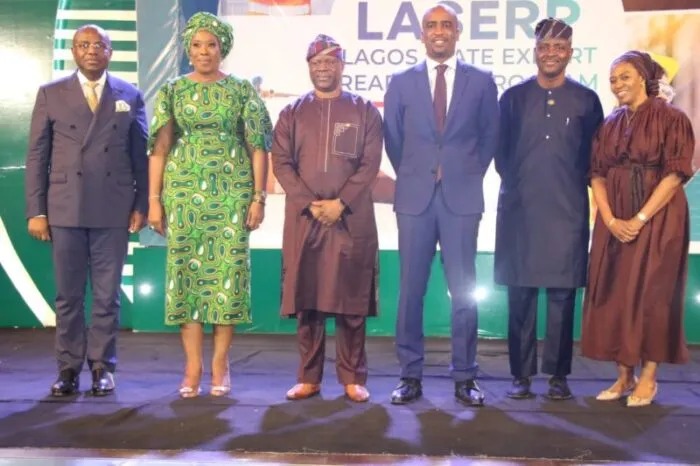
The Lagos State Government has set its sights on generating an additional $1 billion in annual export income within the next five years by empowering small businesses to thrive in global markets. This bold projection follows the graduation of 253 entrepreneurs from the Lagos Export Readiness Programme (LASERP), an initiative designed to prepare local businesses for international trade and investment opportunities.
Speaking at the graduation ceremony, Governor Babajide Sanwo-Olu, represented by his Special Adviser, reaffirmed the state’s commitment to building a diversified economy beyond oil. He emphasised that the strength of Lagos does not lie solely in large corporations but in the vibrancy of its micro, small, and medium enterprises (MSMEs), which he described as “the true backbone of the economy.”
Related: NIAEXPO to Empower Women, Youth & MSMEs in Nigeria
The graduates, now recognised as Trade Ambassadors of Lagos, will play a central role in expanding the state’s presence in global markets. Already, 20 outstanding businesses from the programme have been selected to showcase Made-in-Lagos products at the upcoming Intra-African Trade Fair in Algiers this September. This international platform will connect Lagos entrepreneurs with new buyers, investors, and strategic partners across the continent.
Commissioner for Commerce, Trade and Investment, Folasade Baba-Ambrose, described the initiative as more than just a training programme. In her words, LASERP is “a movement of exporters, innovators, and pioneers, carrying the Lagos spirit across Africa and beyond.” She noted that the project reflects the state’s long-term ambition to move entrepreneurs “from the streets of Lagos to the shelves of the world.”
Lagos already accounts for more than 60% of Nigeria’s non-oil exports, which stood at $5.3 billion in 2024. With this fresh wave of export-ready SMEs, the state projects an additional $1 billion boost in foreign exchange inflows over the next five years, strengthening both its economy and Nigeria’s wider trade balance.
The initiative has also attracted the support of development partners. The Ministry of Finance, represented at the event, praised the collaboration with institutions like Afreximbank and ImpactHer, describing it as a model for how public-private partnerships can unlock economic potential and accelerate export diversification.
For many of the graduates, the programme marks the beginning of a new chapter. Beyond the certificates and recognition, it represents access to markets, mentorship, and opportunities that could redefine the trajectory of their businesses. From fashion brands and agribusiness ventures to tech-driven startups, these SMEs are stepping onto the international stage as ambassadors of Lagos creativity, resilience, and innovation.
With LASERP producing its first cohort of graduates, Lagos has signaled its determination to transform small businesses into global players. The vision is clear: build a diversified economy where Nigerian entrepreneurs can compete globally, drive foreign exchange inflows, and showcase the best of Made-in-Lagos excellence to the world.


