
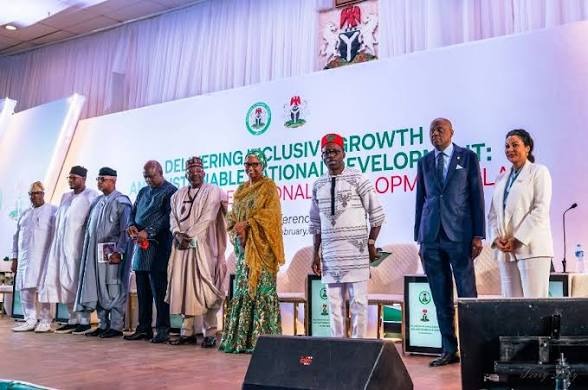
Nigeria’s Federal Government has unveiled a fresh economic direction one that places private sector investment at the center of national growth and development.
In a recent announcement, the government revealed that the next phase of its economic reform agenda will focus on attracting large-scale private capital to drive productivity, create jobs, and unlock new opportunities across key sectors.
Speaking on the new direction, the Minister of Finance and Coordinating Minister of the Economy, Wale Edun, explained that Nigeria is transitioning from a phase of economic stabilisation into one focused on growth, expansion, and investment mobilisation.
This shift reflects a broader strategy to build a more resilient and competitive economyone powered not just by government spending, but by active private sector participation.
Related:FG Targets Climate-Smart Agriculture Investment Push
According to Edun, the goal is clear:
- Boost productivity across industries
- Drive job creation at scale
- Increase income levels and reduce poverty
- $2.2 Billion Already Deployed
The government’s collaboration with the Islamic Development Bank (IsDB) is already showing results, with over $2.2 billion deployed into critical sectors such as infrastructure, agriculture, and energy.
Now, the focus is on scaling these partnerships to attract even faster and larger investments, particularly in:
- Energy and power
- Infrastructure development
- Agriculture and food systems
- Digital innovation
These sectors are seen as key drivers of Nigeria’s long-term competitiveness and economic sustainability.
Why the Private Sector Matters
One of the biggest takeaways from this shift is the recognition that government alone cannot fund Nigeria’s development needs.
With the private sector accounting for a significant share of the economy, the new strategy aims to:
- Mobilise domestic and foreign investments
- Reduce reliance on public financing
- Accelerate execution of high-impact projects
This aligns with Nigeria’s ambition to build a $1 trillion economy, powered by innovation, technology, and enterprise growth.
What This Means for MSMEs and Entrepreneurs
For entrepreneurs and small businesses, this policy direction signals new opportunities.
As investment flows into key sectors, MSMEs can expect:
- Increased access to funding and partnerships
- Expansion in value chains (especially in agriculture and tech)
- More demand for local products and services
- Improved infrastructure to support business growth
In essence, this is a call for Nigerian businesses to position themselves for scale.
This move by the Federal Government is more than policy, it’s a signal to the market.
Nigeria is actively opening its doors to investors and innovators, and the private sector is now expected to lead the charge. For forward-thinking entrepreneurs, the question is no longer if opportunities will come but how prepared you are to seize them.


