
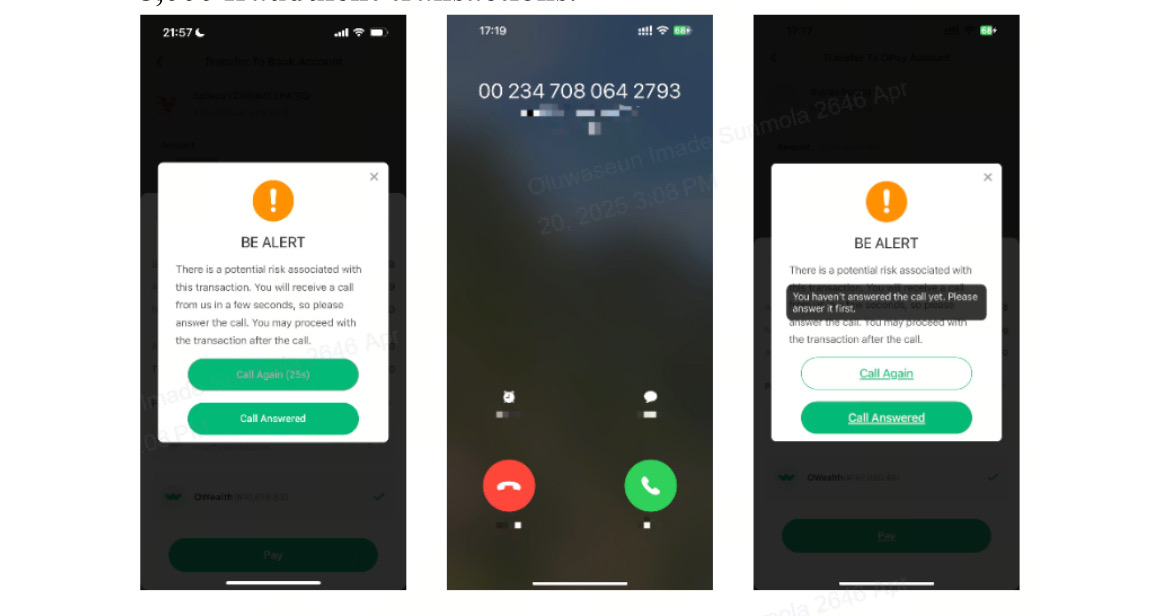
As the Nigerian fintech landscape continues to evolve, security and user trust are becoming increasingly critical. In a bold and timely move, leading digital payments company Opay has launched a scam alert feature designed to help users identify and avoid potential fraudulent transactions before they happen.
Opay’s new in-app feature warns users in real time when they are about to transfer funds to accounts that have been flagged for suspicious or fraudulent activity. When a user attempts such a transaction, a notification pop-up appears, displaying the message:
“This account has been reported for scam or fraudulent activity. Please verify before you proceed.”
This feature is not just a passive warning—it’s a preventive tool that gives users a chance to stop, investigate, and reconsider before completing a transaction that could result in financial loss.
Why This Matters
Fraud is one of the most pressing concerns in Nigeria’s rapidly growing digital payments ecosystem. As more individuals and small businesses move away from traditional banking systems in favor of mobile wallets and online transfers, fraudsters are also evolving, using sophisticated tactics to deceive unsuspecting users.
Related: When Two Giant Elephants Fight
Opay’s scam alert system aims to address this growing concern by leveraging a community-based reporting mechanism—that is, accounts are flagged based on complaints or suspicious activity reported by other users. This creates a kind of crowdsourced fraud detection, which can become more effective over time as more data is collected.
For entrepreneurs, freelancers, and SMEs, this update is particularly significant. Many small business owners rely on digital transactions for everything from supplier payments to customer refunds. The line between a legitimate transaction and a fraudulent one can sometimes be thin—especially when dealing with new clients or unknown vendors.
One important detail to note is that the scam alert does not automatically block transactions. Users still have the freedom to proceed with the transfer if they choose to do so. However, by offering a timely warning, Opay is putting the responsibility—and the power—back in the hands of the user.
This approach allows for flexibility, which is essential in cases where flagged accounts may have been mistakenly reported, while also offering critical risk-awareness in real time.
Implications for the Fintech Industry
Opay’s move may spark a broader industry shift toward more transparent and accountable digital financial systems. While some fintech platforms already employ AI-driven fraud detection tools, few provide direct in-app alerts to users before a transaction is completed.
By introducing a user-facing layer of fraud prevention, Opay is raising the standard for fintech safety in Nigeria and potentially across other emerging markets. This development could set a precedent for more consumer-protective features in the industry, particularly in regions where regulatory enforcement is still catching up with technology.
Smartpreneur Insight: Trust Is Currency
In the digital economy, trust is the new currency. Entrepreneurs cannot afford to lose money to scams—especially in today’s volatile economic climate. Tools like Opay’s scam alert feature provide peace of mind and add a layer of due diligence that can make a real difference in daily business operations.
Whether you’re a small online retailer, a digital consultant, or a food vendor receiving mobile payments, this kind of innovation gives you more confidence in every transaction.
As fintech becomes increasingly integrated into how we work and do business, choosing platforms that prioritize security is no longer a luxury—it’s a necessity.


